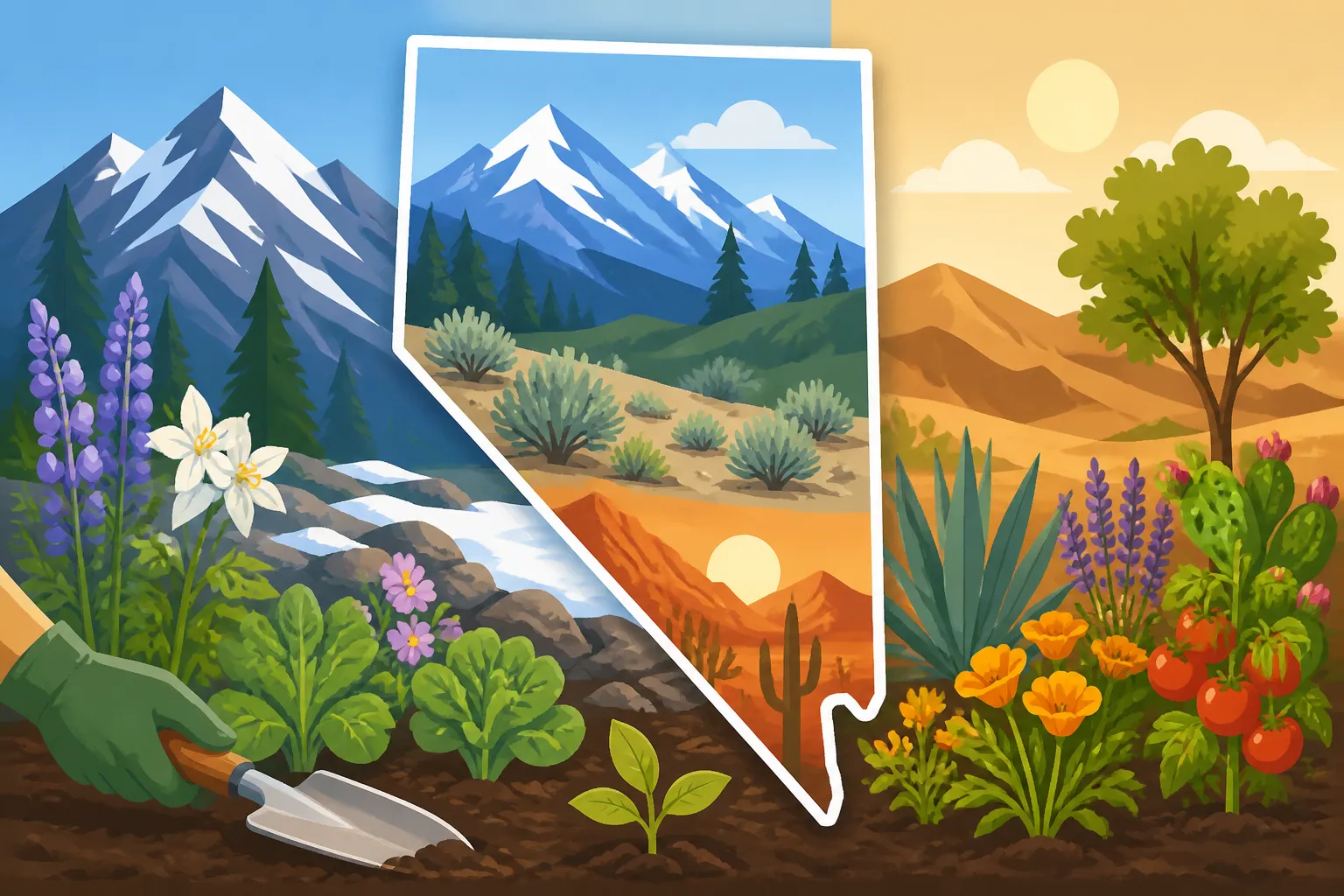
Nevada Regional Planting Guide: Elevation and Microclimate Shifts
A planting calendar can look reliable on paper and still miss the conditions in your yard. Nevada’s elevation, terrain, and exposure create sharp local differences in frost risk, heat, and soil readiness. The practical solution is to use regional calendars as a starting point, then adjust for your site and the crop you want to grow.
Why Nevada planting dates vary so much
Nevada is not one uniform growing region. A garden in a high valley may face cold nights long after a nearby low-elevation site has warmed. In southern desert valleys, heat can become the main limit on planting, even when frost is no longer a concern. These differences affect when seeds germinate, when transplants settle in, and how long crops have to mature.
Elevation is an important part of the picture, but it is not a complete planting rule. Two gardens at similar elevations can behave differently because of slope, wind exposure, nearby walls, shade, soil, or the way cold air moves across the land. A regional calendar can help narrow the options, but local observation is what makes it useful.
The University of Nevada, Reno Extension notes that Reno-area planting dates may differ by several days to two weeks because of local microclimates. That difference is a reminder to treat a planting window as a flexible guide rather than a promise that every neighborhood is ready on the same day.
Microclimates are the small-scale conditions that shape a particular garden. A sunny, sheltered bed near a building may warm earlier than an open plot. A low spot may collect cold air and stay frosty after a nearby slope has thawed. A windy site can dry out seedlings quickly, while afternoon shade may reduce heat stress in a desert garden.
The best planting plan combines three kinds of information:
- Regional patterns: whether your garden is in a high-elevation, northern, central, or southern part of Nevada.
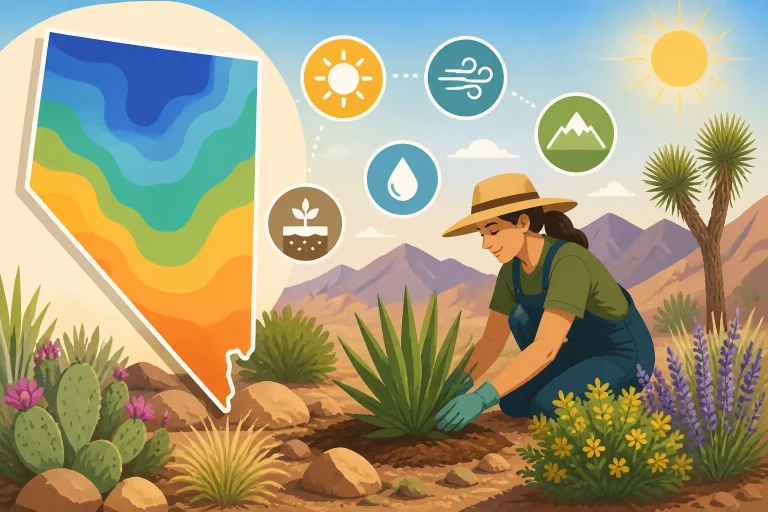
- Site conditions: how your yard handles sun, wind, cold air, and water.
- Crop needs: whether the plant prefers cool conditions, warm soil, or a long stretch of frost-free growth.
For a broad overview of timing across regions and seasons, see Nevada Vegetable Planting Calendar Across Three Growing Seasons. If you are using a planting calendar built for a nearby community, compare it with your own conditions before acting on a date.
Reading Nevada’s regions as planting clues
Regional labels are useful because they point to recurring patterns. They are not precise descriptions of every neighborhood or garden bed. Use them to anticipate the kind of challenge you may face, then check whether your yard confirms it.
| Garden setting | Conditions to watch | Planting implication |
|---|---|---|
| Northern and central valleys | Cold nights, lingering spring freezes, and a limited warm-season window | Favor cool-season crops when soil is workable; delay tender crops until the site is reliably warm |
| Higher-elevation communities and mountain valleys | Shorter warm periods, exposed sites, and early fall cold | Choose crops that can mature within the local season and protect seedlings from cold snaps |
| Sheltered urban and suburban yards | Walls, fences, pavement, and buildings can change sun, wind, and nighttime temperatures | Use the shelter carefully; warmer spots may suit earlier planting, while shade can help during heat |
| Southern low-desert valleys | Strong heat, intense sun, and a long hot period | Plan around heat as well as frost; cool-season crops may fit better outside the hottest stretch |
| Moapa and Virgin Valleys | Distinct seasonal opportunities for vegetable production | Schedule crops around the local fall, winter, and spring growing periods |
Northern and central valleys
In northern and central Nevada, the main spring question is often whether cold conditions will return after a warm spell. A few mild days can make a garden feel ready, but exposed soil and nighttime temperatures may still be unfavorable for warm-season crops. Early planting is less risky for crops that tolerate cool conditions than for plants that need consistently warm soil.
A local calendar can help identify broad windows for peas, greens, roots, and other cool-season crops. Tender crops such as tomatoes, peppers, squash, and beans need a different decision: wait for the bed and site to warm, and consider whether you can protect plants if conditions turn cold again.
Some northern valleys are colder than nearby urban locations. If your garden sits in a low area or an open basin, a calendar for a more sheltered town may be optimistic. The article Delaying Sowing One to Two Weeks in Colder North Valleys discusses one way gardeners can account for colder local conditions without treating a regional date as universal.
Higher elevations and mountain valleys
At higher elevations, gardeners often have less time for crops that need sustained warmth. The challenge is not just spring frost. A late start can push flowering and harvest into a period when nights are cooling again. Choosing crops that mature reliably within the local window can be more effective than trying to force a long-season crop into a short one.
Exposed sites may also face wind and rapid soil drying. A sheltered bed can help seedlings establish, but shelter should not block needed light or trap excessive heat. If a garden is in a cold pocket, temporary row covers may help protect crops during chilly periods; they do not make every crop suitable for a short season.
For help thinking through local frost patterns at elevation, see Gardening at Higher Elevations in Nevada: Frost and Covers and Tracking Spring Freeze Dates Across High-Elevation Basins.
Southern low-desert valleys
In southern Nevada’s low-desert gardens, an early warm spell does not necessarily mean the best season for every crop has begun. Some vegetables grow well in warmth, while cool-season crops can struggle when heat arrives. The key is to plan backward from the conditions a crop prefers, not simply to follow a familiar spring or fall routine.
A planting calendar for a desert valley may include more than one useful season for vegetables. The University of Nevada, Reno Extension says the Moapa and Virgin Valleys have three major vegetable-growing seasons: fall, winter and spring. That pattern differs from the approach in colder northern gardens, where the central challenge may be fitting crops between lingering spring cold and early autumn freezes.
Heat, intense sunlight, and dry air can stress seedlings and transplants even when they are getting water. A bed that receives strong afternoon sun may be harder on young plants than one with some later-day shade. Read Timing Desert Fall Vegetable Gardens to Avoid Late Summer Heat for a closer look at how heat affects seasonal planning in warm valleys.
Finding your own microclimate
A regional calendar becomes more accurate when you know what your yard does. You do not need specialized equipment to begin. Observe the garden through changing weather, make notes about where frost lingers, and compare exposed beds with sheltered ones.
Look at slope and cold-air movement
Cold air tends to settle in low areas. A depression, the bottom of a slope, or a space behind a solid barrier may stay colder than nearby ground. A slope that allows cold air to drain away can be less frost-prone than a flat low spot, though wind exposure and sun can change the result.
Notice where frost remains after the surrounding area has cleared. Also note where snow or damp soil persists longest. Those observations can help you identify places for hardy crops and avoid putting the most frost-sensitive plants in the coldest part of the yard.
Do not assume that a south-facing bed is always the safest choice. It may warm early, which can encourage plants to start growing before a late cold spell. That position can be helpful for crops that benefit from warmth, but it may not be ideal for plants that should remain dormant or for blossoms vulnerable to a freeze.
Track sun, shade, and nearby structures
Walls, fences, paving, and buildings can alter a garden’s exposure. A sunlit wall may warm the nearby soil and reduce some wind, while a fence may cast shade or create turbulence. Paving can contribute to hotter conditions around plants, particularly during warm weather.
Observe the bed at different points in the day. Morning sun can help warm cool soil, while afternoon shade may protect crops from intense heat. Trees and buildings can also cast seasonal shade that changes as the sun’s path shifts. Plan according to the actual light reaching the bed, not only the direction it faces.
Shelter is not always beneficial. A tightly enclosed garden can have poor air movement, and a sunny sheltered corner may become too hot for cool-season crops. Keep the crop’s needs in mind when deciding whether a warm pocket is useful.
Pay attention to wind and drying
Wind can chill plants, break tender stems, and dry both soil and foliage. A location that is open to strong winds may need more careful seedling establishment than a protected bed. At the same time, excessive shelter can limit air movement, so the aim is not to create a completely closed space.
Wind also makes moisture conditions less predictable. A garden can dry quickly despite irrigation, particularly when the surface is exposed and seedlings have shallow roots. Check soil moisture rather than relying on the appearance of the surface alone. How to Check Vegetable Soil Moisture in Nevada Beds and Pots offers practical ways to assess moisture in beds and containers.
Compare several spots before choosing one
If you have more than one possible planting area, compare them before committing your most sensitive crops. A simple observation log can include:
- Where frost appears first and where it disappears last.
- Which beds warm quickly after cool weather.
- Where wind is strongest.
- Where soil dries fastest.
- Which areas receive afternoon shade.
- How plants respond in each location.
You can then match crops to the site instead of trying to make every bed behave the same way. The coldest area may suit hardy greens or other crops that tolerate cool conditions. A warmer, sheltered location may be better for a heat-loving crop, provided it does not become excessively hot.
Matching crops and planting methods to local conditions
A useful planting calendar groups crops by the conditions they need. That approach is more adaptable than trying to memorize a fixed date for each vegetable. The same crop can have different planting opportunities depending on elevation, exposure, and the length of the local growing period.
Cool-season crops
Cool-season vegetables are generally better candidates for early planting than crops that need warmth. They can often be started when conditions are still too cool for tender summer crops, but “cool-season” does not mean that every seed will germinate in cold, wet, or poorly prepared soil.
Before sowing, check whether the soil is workable and whether it is likely to stay too wet or cold. Seeds in unsuitable conditions may emerge slowly or unevenly. Use Scheduling Vegetable Sowing by Soil Workability and Temperature to think through soil readiness, and see Sowing Hardy Crops as Soon as Soil Can Be Worked in Spring for a related approach.
Where spring cold lingers, succession sowing can spread risk. Rather than putting all the seed in at once, gardeners can sow in stages when conditions allow. That can provide another opportunity if an early sowing struggles, and it may help spread harvests rather than producing everything together. For a practical look at spacing sowings, see Staggering Garden Sowings for Steady Harvests Across Nevada.
Warm-season crops
Warm-season crops need conditions that support active growth. Planting them into cold soil can slow establishment, and a brief warm spell may not mean that the bed is ready. In a short-season garden, the decision also involves whether the crop has enough time to produce before fall cold returns.
Use local conditions to choose between direct sowing and transplanting. Starting plants indoors can give them a head start, but seedlings need to be hardened off before going outdoors. Transplants that move directly from a protected indoor setting into wind, strong sunlight, or cold nights may suffer. See Hardening Off Indoor Seedlings Before Planting Out in Nevada Dirt for a step-by-step discussion.
Warm-season crops are not interchangeable. A tomato, pepper, squash, or bean may respond differently to the same site and planting window. Choosing a variety suited to a shorter or more variable season can reduce the chance that harvest arrives too late. Selecting Vegetable Varieties With Shorter Days to Maturity explains how days to maturity can help with that decision.
Crops for a short season
For high-elevation gardens and colder valleys, crop choice can be as important as planting date. A crop that needs a long stretch of warm weather may be an unreliable choice unless the garden has a favorable microclimate and the grower can protect it. Faster-maturing crops can provide a more dependable fit, though local growing conditions still matter.
Consider whether a crop can produce in your available season, not just whether it can survive a cool night. Survival without enough time to flower, form roots, or mature fruit is not a successful harvest. If cold returns early, crops with a longer development period may remain unfinished.
For a more detailed comparison, see Choosing Quick Vegetables for High Valleys With Short Frost Windows and Planning Warm Vegetables Within a Short Northern Summer Window.
Fall and shoulder-season crops
Planting does not stop when spring ends. In some parts of Nevada, late-season opportunities can suit crops that prefer cooler conditions. The challenge is to give plants enough time to establish and mature before the local cold period arrives.
In hot valleys, avoid treating fall planting as a simple matter of sowing as soon as summer ends. Soil and air may remain hot, which can interfere with germination or stress seedlings. In colder locations, delaying too long can leave crops exposed to freezes before they mature. The timing depends on both the crop and the local heat or frost pattern.
Use Calculating Fall Crop Sowing Dates from Nevada Freeze Normals to plan around the likely end of the season, and Sowing a Second Season of Northern Nevada Cool Crops in August for a closer look at a northern planting opportunity.
Adjusting a calendar to elevation, exposure, and crop needs
A regional calendar is most useful when you treat it as a planning range, then make decisions using local signs. Calendar dates can help you prepare seeds, beds, and covers in advance. They cannot tell you exactly how cold your yard will be on a particular night or how quickly your soil will warm.
Start with a regional window
Choose a calendar that fits your general region and elevation. A calendar for a warm southern valley is unlikely to work well in a high northern basin, and a northern planting schedule may miss opportunities in a warmer desert location. If you are between regional categories, compare the guidance for nearby areas and use the more cautious option for tender crops.
The Nevada Regional Planting Guide: Elevation and Microclimate Shifts approach is to recognize that a regional window needs local adjustment. For a wider view of regional patterns, use Vegetable Gardening Across Nevada Growing Regions and Nevada Vegetable Gardening Guide by Region and Season.
Check the bed instead of relying on a warm afternoon
Air temperature can change quickly. A sunny afternoon may feel suitable while the soil remains cold, especially in a shaded or exposed bed. Before sowing, consider whether the soil is workable and appropriate for the crop. If it is cold, saturated, or compacted, waiting may be more reliable than forcing the calendar.
Soil condition also varies within a yard. Raised beds, containers, and in-ground beds do not necessarily warm or dry at the same pace. A raised bed may drain differently from surrounding soil, and a container can heat or dry more quickly. Adjust the planting plan to the growing medium as well as the outdoor climate.
Keep protection practical
Row covers, low tunnels, and other temporary protection can help manage short periods of cold or wind. They are tools for reducing risk, not a substitute for matching a crop to the season. Covers need attention because they can affect temperature, light, and ventilation. On a warm, sunny day, a protected space may become too hot.
Before planting, decide whether you can monitor and adjust the protection as weather changes. If you cannot, choose a planting window and crop that rely less on constant intervention. Extending the Nevada Growing Season With Row Covers and Low Tunnels discusses how these tools can fit into a longer season.
Use a cautious plan for sensitive crops
For crops damaged by frost, consider the cost of planting too early against the cost of waiting. An early start can be worthwhile in a sheltered garden if protection is available, but it may not be worth the risk in an exposed site. In a short season, carefully planned protection may help; in a hot desert location, shade and moisture management may matter more than cold protection.
Keep backup seed or plants available if a planting is important to your garden. Succession planting can also provide another chance without requiring every crop to be planted at once. The choice depends on how much space you have and whether you want a concentrated or extended harvest.
Reassess when conditions depart from the usual pattern
A calendar should not override what is happening in the garden. If spring stays unusually cold, delay tender crops. If a warm period arrives early, check the soil and consider the chance of a return to cold before planting sensitive varieties. In a hot region, avoid assuming a cooler spell will last long enough to establish cool-season plants.
Keep notes from year to year. Record the approximate point when soil became workable, when vulnerable plants began growing well, and which beds experienced frost damage or heat stress. Over time, that record can make regional guidance more useful for your specific yard.
Common planting-calendar mistakes and how to avoid them
Treating the region as the whole answer
A town or region cannot describe every garden. Differences in slope, shelter, shade, and drainage can matter within a small area. Use regional guidance to narrow the options, but do not assume every bed shares the same planting conditions.
Planting every crop by the same signal
A garden may be ready for peas while still being too cold for tomatoes. It may be suitable for a fall root crop while the soil is still too hot for a different cool-season seed. Match the planting decision to the crop’s needs rather than treating “the garden” as ready all at once.
Confusing frost-free weather with ideal growing weather
A period without frost does not guarantee warm soil or comfortable conditions for every crop. Some plants grow poorly in cold soil even if they are not immediately killed by a light chill. Others can handle cool conditions but struggle when summer heat intensifies.
Forgetting that heat can end a planting opportunity
In southern Nevada, heat can be as important as frost when planning. A crop may have a useful planting window before or after the hottest period, rather than throughout the entire frost-free season. For additional detail, see How to Keep Summer Vegetables Alive During Extreme Desert Heat.
Ignoring wind and water stress
Seedlings can fail because they dry out or are battered by wind, even when planting dates seem appropriate. Protect young plants from harsh exposure where possible, and check the root zone rather than judging moisture from surface appearance. In dry conditions, irrigation needs also change with temperature, wind, soil, and crop growth. Adjusting Garden Irrigation Schedules for Scorching Nevada Heat covers the seasonal side of that decision.
Assuming one successful year proves a date is dependable
Weather varies. A planting that succeeded during a mild spring may fail in a colder one. Treat personal records as useful evidence, not a fixed rule. Keep some flexibility in the plan, especially for crops that are sensitive to cold or need a long warm season.
Frequently Asked Questions
Should I follow a planting calendar for my nearest city?
Use it as a starting point, not a guarantee. Your yard may be colder, warmer, windier, or more sheltered than the location represented by the calendar. Compare its guidance with your elevation, exposure, and observations of frost and soil conditions.
Does a warmer microclimate mean I should plant everything earlier?
No. A warmer spot may support earlier planting for some crops, but the risk of a late cold period remains. It may also become too hot for cool-season crops or dry out quickly. Adjust by crop rather than moving the whole garden schedule forward.
What should gardeners in higher elevations prioritize?
Focus on crops that fit the local season, protect vulnerable seedlings when needed, and avoid delaying warm crops so long that they cannot mature before cold returns. Local calendars and records from nearby high-elevation gardens can help refine those choices.
Are southern Nevada gardens planted only in spring?
No. The timing depends on location and crop. The Moapa and Virgin Valleys have seasonal opportunities beyond spring, while heat can make some periods difficult for particular vegetables. Plan around both crop preference and local temperatures.
Sources
- University of Nevada, Reno Extension — Getting Started with a Vegetable Garden | Extension | University of Nevada, Reno (checked November 15, 2026)
- University of Nevada, Reno Extension — Fruit, Flower and Seed Vegetable Varieties for the Moapa and Virgin Valleys | Extension | University of Nevada, Reno (checked November 15, 2026)
Disclaimer
This article is for general informational purposes only and does not constitute professional advice. Laws, prices and regulations vary by location and change over time. Consult a qualified professional for guidance on your specific situation. Nevada Gardening Guide is not a government agency and is not affiliated with any university extension, state department of agriculture or other government agency.