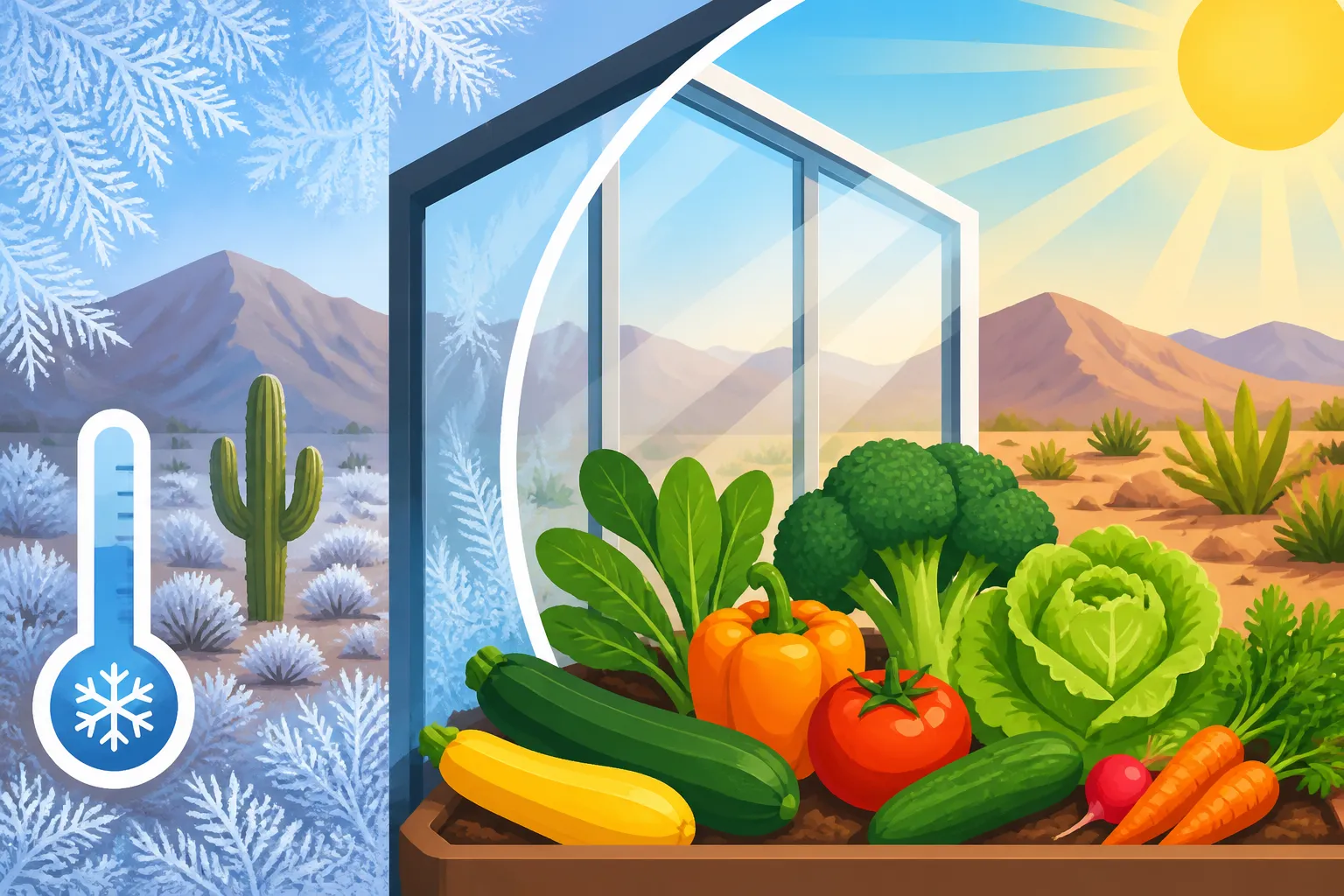
How Frost-Free Windows Shape Nevada Vegetable Choices
Nevada gardeners can find a vegetable that thrives in their winter temperatures and still lose it to a spring or autumn freeze. The challenge is matching crops not just to a broad region, but to the frost-free window at the garden site. This guide explains how to use that window to choose vegetables, plan sowing and transplanting, and reduce the risk of an unfinished harvest.
What a frost-free window tells you
A frost-free window is the stretch between the last spring freeze and the first fall freeze. For vegetable planning, it helps answer a practical question: does a crop have enough time to grow and produce before cold returns?
A commonly used measure is the freeze-free growing season length based on the temperature threshold of 32°F. It describes a period between freeze events, not a promise that every day inside it will be warm, sunny, or suitable for planting. Nor does it describe how hot the site gets in summer, how quickly its soil warms, or how much time a particular vegetable needs to mature.
The probability attached to a frost estimate matters. A 50% probability is a planning reference, not a guarantee for a given season. A later-than-usual spring freeze or an earlier-than-usual fall freeze can shorten the usable window. A sheltered garden might also have different conditions from an exposed weather station, even when the two are relatively close.
That uncertainty changes how to use the window. Treat it as a starting point for crop selection, then factor in the crop’s temperature preferences, the time it needs to mature, your site’s conditions, and the flexibility you have to protect plants. If a crop needs nearly the whole available window, there is little room for a cold snap or slow early growth. If it matures comfortably within it, you have more leeway.
The window is not a hard boundary for every vegetable. Cool-season crops may grow before the last spring freeze or continue after the first light fall freeze, especially when protected. Warm-season crops generally need conditions that are more reliably warm, not merely the absence of a 32°F freeze. So frost-free length is a useful filter, but it does not replace attention to soil temperature, heat, and local weather.
For a broader look at how Nevada conditions differ from one growing area to another, see Nevada Regional Planting Guide: Elevation and Microclimate Shifts and Vegetable Gardening Across Nevada Growing Regions.
Why Nevada vegetable choices vary so much
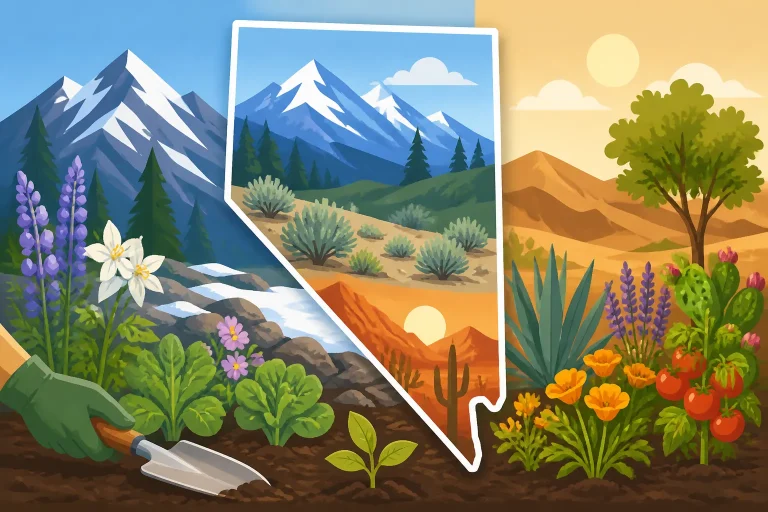
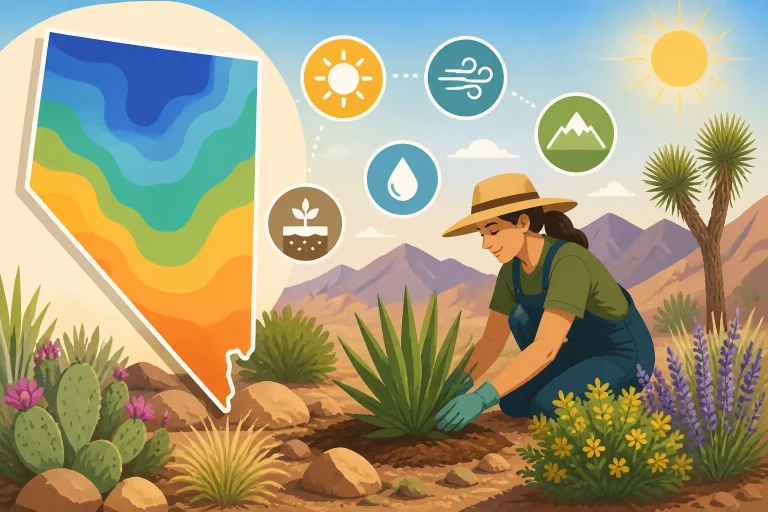
Nevada is not one uniform vegetable-growing climate. Elevation, terrain, exposure, and local cold-air movement can all affect how early a garden warms in spring and how long it stays frost-free in fall. A garden in a valley may not follow the same schedule as a higher, more exposed site. Even neighboring yards can differ if one sits in a low, cold pocket and another is sheltered by a wall or slope.
The weather-station records illustrate why a statewide planting calendar should be treated as a starting point rather than a single schedule. At the Mercury Desert Rock Airport weather station in Nevada, the 1991–2020 normal freeze-free growing season length (32°F) at 50% probability is 242.0 days, according to NOAA National Centers for Environmental Information.
At the Ely Yelland Field Airport weather station in Nevada, the 1991–2020 normal freeze-free growing season length (32°F) at 50% probability is 91.0 days, according to NOAA National Centers for Environmental Information.
At the Reno Tahoe International Airport weather station in Nevada, the 1991–2020 normal freeze-free growing season length (32°F) at 50% probability is 184.0 days, according to NOAA National Centers for Environmental Information.
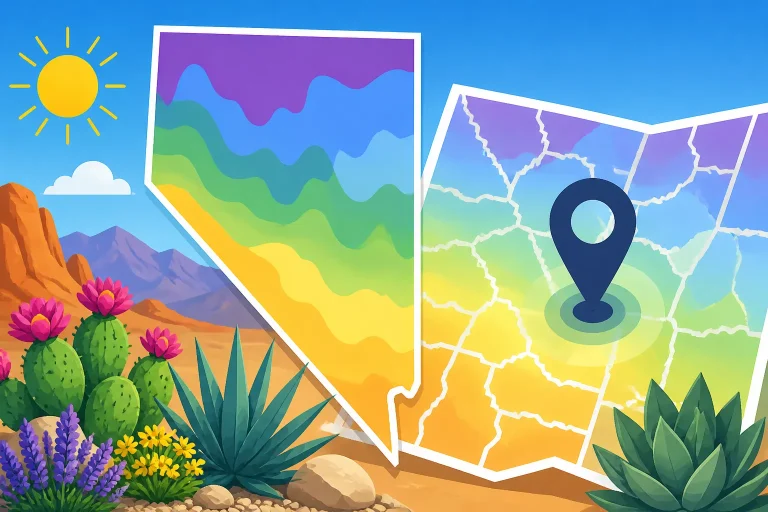
These station values are useful examples, not automatic planting instructions for every place in the surrounding area. A weather station represents its own location and record. A garden’s elevation, slope, wind exposure, shade, and cold-air drainage can make the actual growing conditions different. Before using a date-based calendar, compare its assumptions with what happens in your own yard.
| Garden planning situation | What to consider when choosing crops |
|---|---|
| A long local frost-free window | You may have more room to try crops that need a longer warm season, but summer heat and water needs still matter. |
| A short or uncertain window | Favor crops that mature promptly, and avoid relying on a late harvest from a crop that needs most of the season. |
| A sheltered garden | Protection may help crops through brief cold spells, but it does not remove the need to plan for the local season. |
| A cold pocket or exposed site | Use a more cautious schedule and consider crops that can finish earlier or tolerate cool conditions. |
| A garden with varied beds | Plan each bed around its own sun, warmth, drainage, and exposure instead of assuming the whole yard has one microclimate. |
If you garden in a high valley or basin, Why Elevation and Frost Timing Matter More Than Plant Hardiness Zones explains why a winter hardiness zone cannot answer all of your vegetable-timing questions. To understand how local station records are interpreted, see Nevada Weather Station Freeze Dates: Spring and Fall Guide.
Choose crops by temperature preference and available time
A useful first step is to sort vegetables into broad temperature groups. This is not a precise planting calendar; it is a way to narrow your choices before deciding when to sow or transplant.
Cool-season vegetables
Cool-season crops are generally suited to cooler growing conditions. They are often the natural choice for early spring and fall, when warm-season vegetables may struggle to establish or finish. Depending on the crop and local conditions, a gardener may be able to sow or grow them before the main frost-free period or extend their harvest into cooler weather.
That does not mean every cool-season crop can withstand every freeze. A young seedling, a mature plant, and a harvestable part can respond differently to cold. Likewise, a mild frost and a hard freeze are not interchangeable. Check the crop’s requirements and observe how the local garden responds rather than assuming that “cool-season” means immune to frost.
Cool-season crops can also help gardeners make use of a short growing window. Some can be harvested while temperatures are still cool, before a warm-season crop is ready to take over the bed. In areas where summer heat arrives quickly, this can be a more reliable strategy than trying to keep cool-weather vegetables going through conditions they do not favor.
For ideas suited to colder spring conditions, see Cool-Season Vegetable Guide for Northern Nevada and Matching Cold-Hardy Vegetables to Nevada Freeze Timing.
Warm-season vegetables
Warm-season crops need more than a calendar interval without a 32°F freeze. They generally establish and grow best after temperatures have become favorable for them. Planting too early can leave seedlings and transplants stalled in cold soil, even if the weather forecast looks mild. Cold nights, chilly ground, and a sudden freeze can all put an early planting at risk.
In a short-season garden, the choice is not simply “warm vegetables or none.” It is a matter of choosing crops that have a reasonable chance of reaching harvest, starting them in a way that saves time where appropriate, and giving them a favorable site. A gardener can compare seed-packet maturity information with the likely usable part of the local season, while leaving some margin for weather delays.
Heat is a separate consideration. A long frost-free season does not guarantee that a crop will produce well during intense summer conditions. Some vegetables may slow, suffer, or set fruit poorly when heat becomes excessive. In a hot, dry site, the most suitable crop may be one that can handle summer temperatures and irrigation demands, even if the nominal frost-free window is generous.
For regional timing and heat considerations, see When to Plant Warm Vegetables in Southern Nevada Spring Gardens, Timing Tomatoes and Peppers Around Nevada Summer Heat, and How to Keep Summer Vegetables Alive During Extreme Desert Heat.
Crops that bridge the seasons
Some vegetables fit more than one planting period. A crop may be sown for an early harvest, then planted again for fall, provided the site’s heat and frost timing cooperate. This can spread harvests and make use of a bed after an earlier crop has finished. It also reduces dependence on one planting date that could be disrupted by a late freeze or a hot spell.
A second planting should not be treated as a simple copy of the first. The spring bed may be warming, while the fall bed is cooling. A crop that establishes readily in spring might struggle to germinate in hot soil in late summer. A fall crop also needs enough time to grow before cold weather limits development. Consider the conditions at the start and end of each planting, not just the name of the season.
For practical planning across multiple planting periods, Nevada Vegetable Planting Calendar Across Three Growing Seasons and Planning Three Vegetable Seasons: Early Spring, Summer, and Fall offer useful context.
Match the crop’s maturity needs to the window
Once you have sorted crops by temperature preference, compare their expected time to maturity with the usable growing period at your site. Seed packets and plant labels often provide days to maturity, but the number is a guide under particular growing conditions, not a guaranteed countdown. Cold soil, transplant shock, limited sunlight, heat stress, and inconsistent moisture can all delay development.
When comparing options, ask whether the crop can finish with a margin before the likely end of the season. A crop that is expected to mature just before fall frost may be a gamble in an exposed garden. A similar crop with a shorter maturity period may provide a safer choice. The same principle applies in spring: starting a warm-season crop before the ground and nights are ready can use up valuable time without producing healthy growth.
Consider what “maturity” means for the vegetable you want. Some crops are harvested as young leaves or immature fruit, while others need to reach a fuller size or develop more fully before harvest. If you are willing to pick at an earlier stage, you may have more flexibility, but the result may differ from a full-size harvest. Use the crop description to understand what the maturity estimate actually refers to.
A simple comparison can help:
| Question | Why it matters |
|---|---|
| Does the crop tolerate cool conditions during establishment? | This helps determine whether it can be started before the warm-season planting period. |
| Does it need warm soil to germinate or grow well? | Sowing too early can delay emergence or weaken growth. |
| How long does it usually take to reach the harvest stage you want? | A crop may need more of the local window than the calendar suggests. |
| Can it be harvested young or in stages? | Flexible harvest can reduce the risk of losing the whole crop to an approaching freeze. |
| Does it struggle in intense summer heat? | A long frost-free interval can still include unfavorable growing weather. |
| Is a protected location available? | Covers may offer some flexibility, though they do not guarantee protection from every freeze. |
The goal is not to fill every bed with the fastest-maturing vegetables. Flavor, household use, available space, and growing conditions matter too. Rather, use maturity information to identify risk. If a favorite crop needs a long period of favorable weather, try it in the warmest suitable part of the garden, select a faster-maturing option where appropriate, or grow a smaller trial planting before committing a large bed.
For more help comparing packet estimates and harvest timing, see Using Days to Maturity to Schedule Nevada Harvests and Selecting Vegetable Varieties With Shorter Days to Maturity. For fall planning, Calculating Fall Crop Sowing Dates from Nevada Freeze Normals can help connect the expected harvest period with local freeze patterns.
Plan sowing and transplanting around real garden conditions
A calendar date is a convenient reminder, but soil and weather conditions should guide the final decision. A bed may still be cold or saturated when a general calendar suggests sowing. Another bed, warmed by sun and sheltered from wind, may be ready sooner. Watch your own site and avoid treating a statewide date as a command.
Direct sowing
Seeds sown outdoors need conditions suitable for germination and early growth. A crop that can tolerate cool weather may still fail to emerge well in soil that is too cold, wet, or compacted. Before sowing, check whether the bed drains, whether the soil is workable, and whether the forecast suggests a likely cold snap. If conditions are not ready, waiting can be more productive than putting seed into ground that delays it.
The seed packet’s instructions can help distinguish crops suited to direct sowing from those usually started indoors or transplanted. They can also clarify the crop’s preferred soil conditions. The timing of emergence matters: a seed that sits in cold ground may be exposed to rot, pests, or a later period of stress before it establishes.
For practical checks before planting, see Scheduling Vegetable Sowing by Soil Workability and Temperature and Using Soil Temperature Baselines to Guide Sowing Dates.
Transplanting
Transplants can give a crop a head start, but they still need to adjust to outdoor conditions. Seedlings raised indoors are not automatically ready for a garden bed. They may need gradual exposure to outdoor light, wind, and temperature changes before planting. Moving them outside abruptly can slow growth or damage leaves, reducing the advantage gained by starting early.
A transplant also needs a suitable landing spot. Cold soil can restrain root growth, while strong sun and dry wind can stress a plant that has not acclimated. Choose a mild, manageable period for planting when possible, water the root area appropriately, and keep an eye on the forecast. A transplant can be protected, but protection is a buffer, not a guarantee that the season has changed.
See Hardening Off Indoor Seedlings Before Planting Out in Nevada Dirt for more on preparing seedlings to move outdoors.
Keep a margin in your schedule
If your plan depends on ideal weather at every step, it is fragile. Leave room for slow germination, a delayed transplant, or an unexpected cold spell. In a short season, that margin can be the difference between a crop reaching a useful harvest and remaining immature when frost arrives.
A practical way to build in flexibility is to divide planting decisions into low-risk and higher-risk choices. Start with crops that fit the local conditions and do not require the entire growing window. Then try a smaller amount of a crop with a tighter schedule. You can learn whether your garden is warm enough, whether a protected bed changes the outcome, and whether the harvest is worth repeating.
Staggered sowing can also spread risk, but it works only when the later planting has enough time and suitable weather to mature. A second sowing of a quick crop may be useful; a late sowing of a slow crop may simply shift the same risk toward fall. For succession planning, see Staggering Garden Sowings for Steady Harvests Across Nevada.
Use microclimates and protection without overpromising
A yard’s microclimates can make a meaningful difference to vegetable choices. A sun-facing wall may warm a bed earlier, while a low spot may collect cold air. Wind exposure can dry plants and soil, and shade can slow warming or limit growth. Before deciding that a crop is unsuitable for your location, observe the garden across different conditions and compare how its beds behave.
A sheltered site can extend opportunities, especially for crops near the edges of their normal planting period. But a warmer corner does not turn a short-season location into a reliably long-season one. Likewise, a cold pocket can shorten the practical window compared with a nearby station’s record. If you keep notes on the first and last frost effects in different beds, your planting choices can become more locally informed over time.
Row covers and low tunnels can help buffer crops from some cold and wind. Their effectiveness depends on the cover, how it is installed, the weather, and the crop. They should be considered support for a sound planting plan, not permission to ignore the forecast. Covers also need attention: they can trap heat when weather warms, and plants still need light, airflow, and appropriate water.
For more detail on extending the season, see Extending the Nevada Growing Season With Row Covers and Low Tunnels and Using Row and Plant Covers for Nevada Spring Extension. If your garden is at higher elevation or has a recurring cold pocket, Gardening at Higher Elevations in Nevada: Frost and Covers may help you think through the added timing challenges.
Protection is not a substitute for crop choice. If a crop needs sustained warmth and your site remains cool, a cover may reduce exposure but may not solve the underlying temperature mismatch. In the same way, a cover can help a fall crop through a brief cold episode without making every late planting worthwhile. Compare the protection you can realistically provide with the crop’s needs and the time remaining.
Build a flexible Nevada planting calendar
A useful calendar is not just a list of dates. It is a plan that links local frost patterns, crop preferences, maturity needs, and the realities of the garden. Start with the climate information for the nearest suitable weather station, then adjust for your own elevation, exposure, and observations. Treat a 50% probability estimate as a reference point and leave room for variation from season to season.
A dependable planning process can look like this:
- Identify the crops you actually want to eat, preserve, or share. A shorter list makes it easier to plan beds and avoid planting more than you can manage.
- Sort those crops by whether they favor cool or warm conditions. Note any crops that can be grown in more than one season.
- Check each crop’s sowing, transplanting, and harvest guidance. Pay attention to whether it is intended for direct sowing or transplanting and what the maturity estimate describes.
- Compare its likely growth period with the usable part of your local frost-free window. Avoid schedules that leave no margin for weather or slow establishment.
- Consider whether the crop tolerates summer heat, because frost-free time can include conditions that are too hot for reliable growth.
- Match crops to individual beds. Use warmer, sheltered spots for crops that need help getting established, and reserve cooler or more exposed beds for choices that suit them.
- Decide whether covers, indoor starts, or staggered sowing are practical for your garden. Use them to improve flexibility rather than to compensate for a poor crop-site match.
- Keep notes on what happens. Record sowing and transplanting conditions, cold spells, heat stress, and harvest results so you can adjust future plans.
A calendar can be adjusted as the season unfolds. If spring stays cold, delay tender crops and use the time for suitable cool-season vegetables or bed preparation. If a fall cold snap appears likely, harvest mature crops promptly and protect only those plants that are worth trying to carry further. If summer heat becomes the limiting factor, shift attention to crops that tolerate it or plan a later planting when conditions ease.
It is also reasonable to revise the garden’s ambitions. A short window does not mean vegetable gardening is impractical; it means crop choice and timing matter more. A gardener can focus on dependable cool-season harvests, choose warm-season crops with a better chance of finishing, or use containers and protected beds to manage particular needs. In a longer window, there may be more room to experiment, but heat and water still shape the result.
The best plan is therefore local and adjustable: use the frost-free window to rule out obviously poor matches, not to predict every day of the season. Combine it with temperature preferences, days to maturity, soil readiness, exposure, and the harvest you want. That approach makes the calendar more useful while keeping expectations realistic.
Frequently Asked Questions
Does a frost-free window mean there will be no frost during that period?
No. A freeze-free season length is a statistical planning measure, not a guarantee for an individual year or garden. Local conditions can differ from the station record, and weather varies from season to season.
Can warm-season vegetables be planted as soon as the last spring freeze passes?
Not necessarily. Warm-season crops often need warm soil and favorable nights as well as a reduced risk of frost. Check crop-specific planting guidance and local conditions before sowing or transplanting.
Should a gardener in a short-season area grow only quick crops?
No. Quick-maturing crops can reduce risk, but the right choices depend on temperature preference, available protection, site conditions, and the harvest you want. A small trial planting can help assess a higher-risk crop.
Can covers make an unsuitable crop a good choice?
Covers can provide a useful buffer, but they do not guarantee favorable temperatures or enough time to mature. Consider them one part of a planting plan, not a replacement for matching crops to the local window.
Sources
- NOAA National Centers for Environmental Information — NOAA NCEI 1991–2020 Climate Normals — Mercury Desert Rock Airport, Nevada (checked November 14, 2026)
- NOAA National Centers for Environmental Information — NOAA NCEI 1991–2020 Climate Normals — Ely Yelland Field Airport, Nevada (checked November 14, 2026)
- NOAA National Centers for Environmental Information — NOAA NCEI 1991–2020 Climate Normals — Reno Tahoe International Airport, Nevada (checked November 14, 2026)
Disclaimer
This article is for general informational purposes only and does not constitute professional advice. Laws, prices and regulations vary by location and change over time. Consult a qualified professional for guidance on your specific situation. Nevada Gardening Guide is not a government agency and is not affiliated with any university extension, state department of agriculture or other government agency.